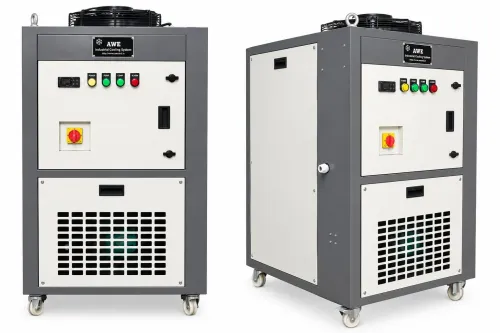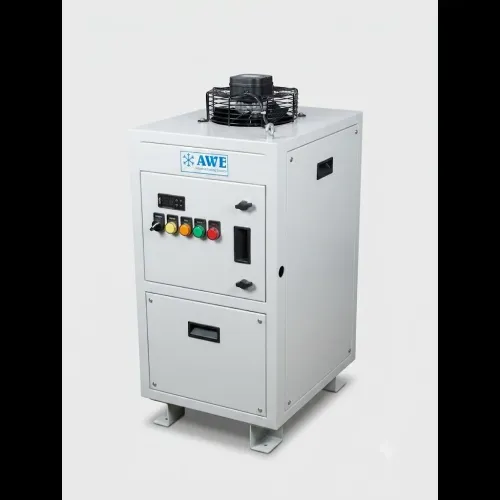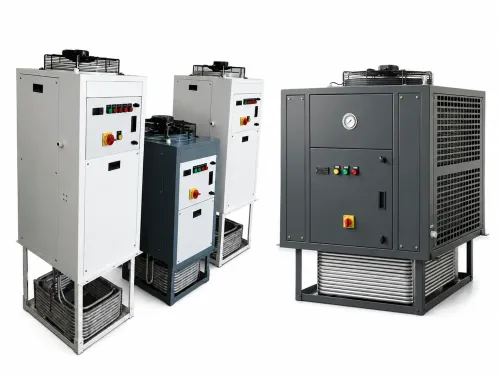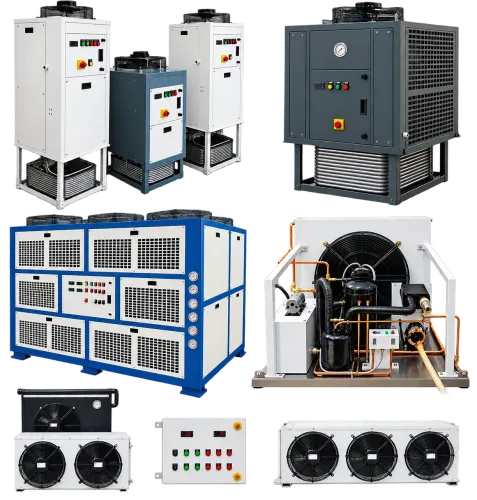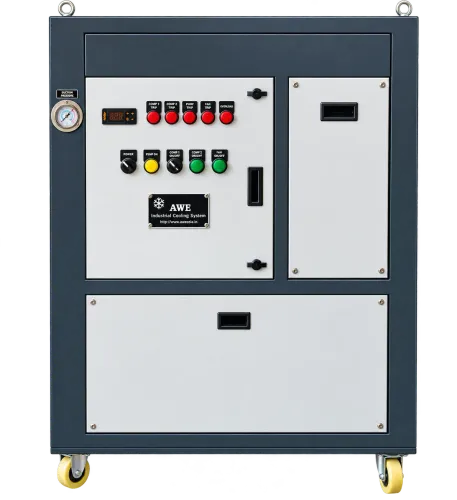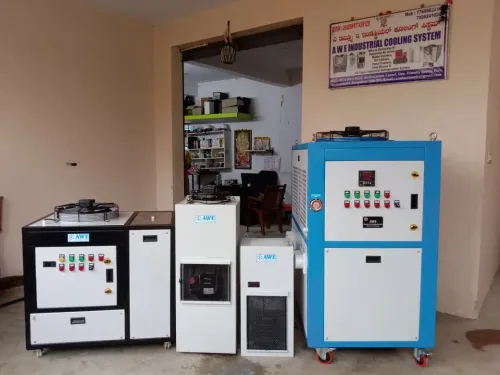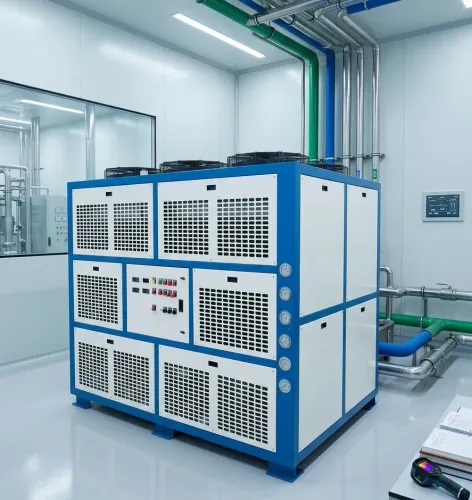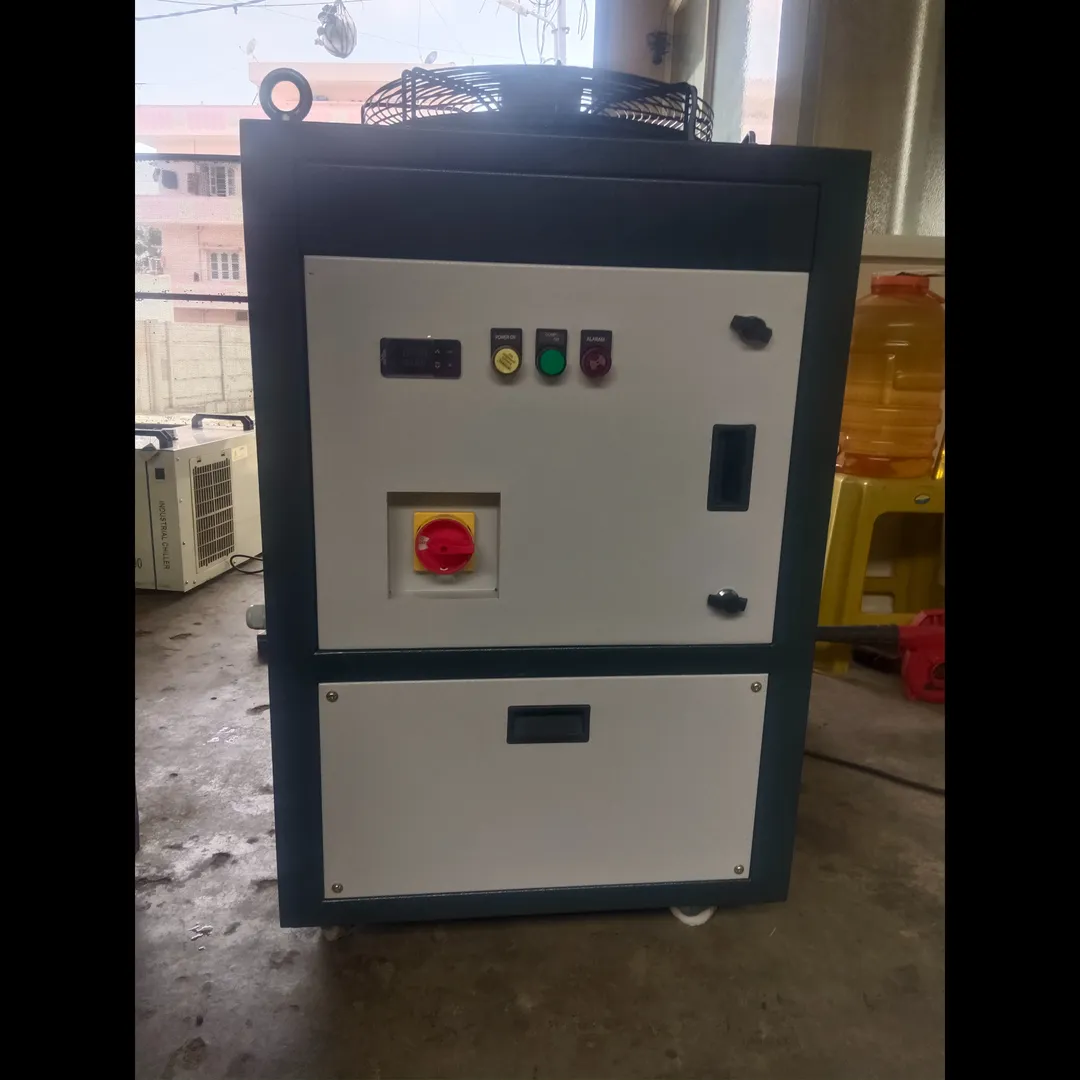
An air cooled process chiller is an essential industrial cooling system designed to provide consistent and controlled temperature for manufacturing processes, machinery, and production equipment. Unlike water-cooled chillers, air cooled process chillers use ambient air to remove heat from the refrigerant, eliminating the need for a cooling tower and condenser water system.
Industries such as plastics, pharmaceuticals, food processing, chemical manufacturing, CNC machining, laser cutting, printing, and metalworking rely on industrial process chillers to maintain stable operating temperatures and improve production efficiency.
What Is an Air Cooled Process Chiller?
An air cooled process chiller is a refrigeration-based cooling system that removes heat from process fluids such as water or glycol. The cooled fluid is then circulated through industrial equipment or production processes to maintain the required temperature.
The main components generally include:
- Compressor
- Air-cooled condenser
- Evaporator
- Expansion valve
- Refrigerant circuit
- Process pump
- Temperature control system
- Electrical control panel
Because the condenser rejects heat directly into the surrounding air, an air cooled chiller does not require a separate cooling tower or condenser water pump.
How Does an Air Cooled Process Chiller Work?
The operation of an air cooled process chiller follows a continuous refrigeration cycle.
First, the process fluid enters the chiller and transfers its heat to the refrigerant through the evaporator. The compressor then increases the pressure and temperature of the refrigerant. The hot refrigerant moves through the air-cooled condenser, where fans circulate ambient air across the condenser coils and remove the heat.
The refrigerant then passes through the expansion device, reducing its pressure and temperature before returning to the evaporator. This cycle continues to provide a consistent supply of chilled fluid to the industrial process.
Key Benefits of Air Cooled Process Chillers
1. Consistent Temperature Control
Maintaining stable process temperatures is important for product quality and equipment performance. An industrial process chiller can provide controlled cooling according to the requirements of the application.
2. No Cooling Tower Required
One of the biggest advantages of an air cooled process chiller is that it does not require a cooling tower or condenser water circuit. This can simplify installation and reduce water consumption.
3. Lower Water Consumption
Since heat is rejected directly to the atmosphere, air cooled chillers can be suitable for facilities where water availability is limited or where minimizing water usage is important.
4. Easy Installation
Air cooled systems generally have a relatively straightforward installation process because they do not need cooling-tower infrastructure, condenser-water piping, or cooling-tower treatment systems.
5. Reduced Maintenance
Eliminating the cooling tower and condenser water loop can reduce maintenance requirements associated with water treatment, scaling, corrosion, and biological growth.
6. Suitable for Different Industries
Air cooled process chillers can be designed for a wide range of industrial applications, from machinery cooling to temperature control in manufacturing processes.
Applications of Air Cooled Process Chillers
Air cooled process chillers are commonly used in:
- CNC machine cooling
- Plastic injection molding
- Extrusion machines
- Laser cutting machines
- Printing machinery
- Pharmaceutical manufacturing
- Food processing
- Chemical processing
- Welding equipment
- Die casting
- Metalworking
- Hydraulic equipment
- Laser machines
- Industrial cooling applications
- Laboratory and testing equipment
The required chiller capacity, temperature range, pump specifications, and process-fluid type depend on the specific application.
Air Cooled Process Chiller for CNC Machines
CNC machines generate significant heat during machining operations. An air cooled process chiller for CNC machines can circulate temperature-controlled coolant through the machine's spindle, hydraulic system, or other heat-generating components.
Stable cooling can help maintain machining accuracy, reduce thermal stress, and support reliable machine operation.
Air Cooled Process Chiller for Plastic Injection Molding
Temperature control is particularly important in plastic processing. An industrial chiller for plastic injection molding machines can provide chilled water for mold cooling and other process requirements.
Accurate cooling can contribute to consistent cycle times, improved product quality, and efficient production.
How to Select the Right Air Cooled Process Chiller
Selecting the correct chiller requires understanding the application's cooling requirements rather than choosing a unit based only on nominal capacity.
Important factors include:
Cooling Capacity
Determine the amount of heat that needs to be removed from the process. Chiller capacity is commonly specified in TR (tons of refrigeration) or kW.
Required Temperature
The required supply and return temperatures should be identified before selecting the chiller.
Process Fluid
The system may use water, glycol-water mixtures, or another compatible cooling fluid depending on the application and required operating temperature.
Flow Rate
The required process-fluid flow rate is important for selecting the appropriate pump and heat exchanger.
Ambient Temperature
Because the condenser uses ambient air, the maximum surrounding temperature should be considered when selecting an air cooled chiller.
Operating Conditions
The chiller should be selected according to operating hours, load variation, installation environment, and required temperature stability.
Why Choose a Reliable Air Cooled Process Chiller Manufacturer?
A process chiller is an important part of industrial production, so reliability and correct system sizing are critical. An experienced air cooled process chiller manufacturer can evaluate the application and recommend suitable cooling capacity, temperature range, pump configuration, heat exchanger, controls, and other specifications.
A properly engineered chiller can provide reliable process temperature control while helping manufacturers maintain production efficiency.
Air Cooled Process Chiller Manufacturer in Bangalore
For industries in Bangalore and across India, choosing a local air cooled process chiller manufacturer can offer advantages such as application-specific system design, installation support, troubleshooting, and after-sales service.
Manufacturers and engineering companies can select the appropriate chiller based on the machine type, process load, required temperature, fluid flow rate, and operating environment.
Conclusion
An air cooled process chiller is a practical and efficient solution for industrial applications that require reliable temperature control. Its simple cooling infrastructure, low water dependency, ease of installation, and wide range of applications make it suitable for many manufacturing industries.
When selecting an industrial chiller, businesses should consider cooling capacity, process temperature, flow rate, fluid type, ambient conditions, and operating requirements. Working with an experienced industrial process chiller manufacturer can help ensure that the system is correctly sized and optimized for the application.
Keywords