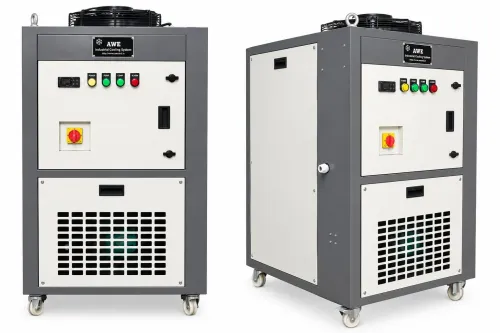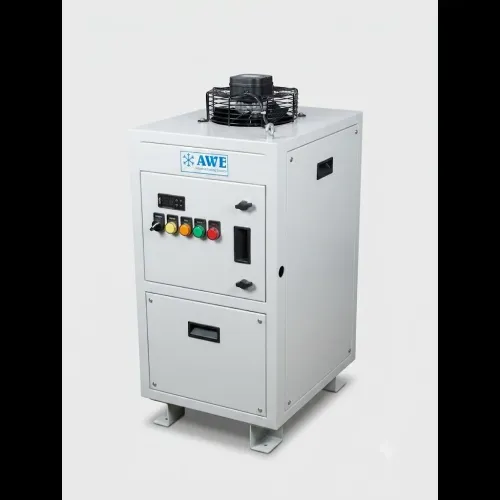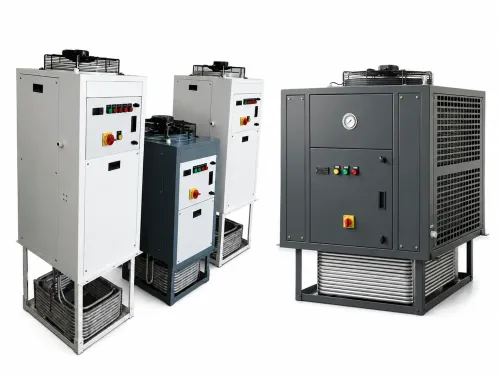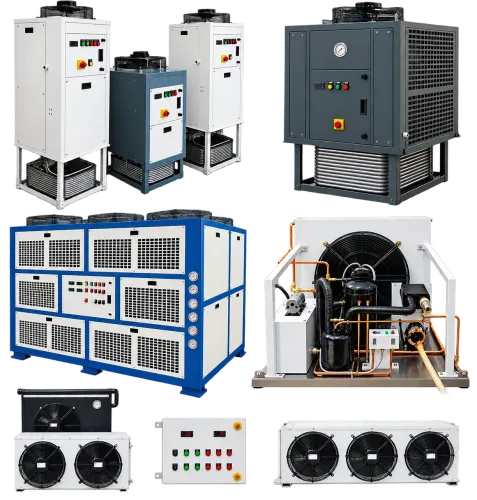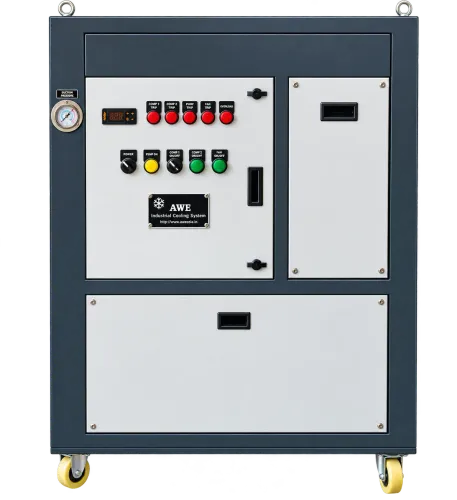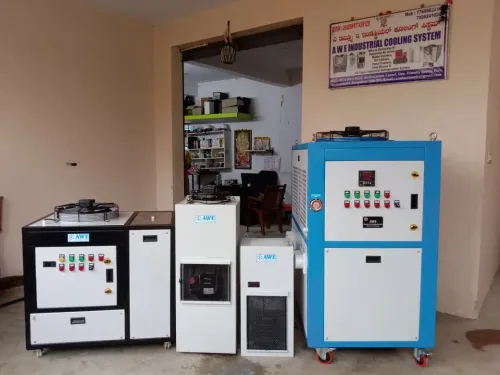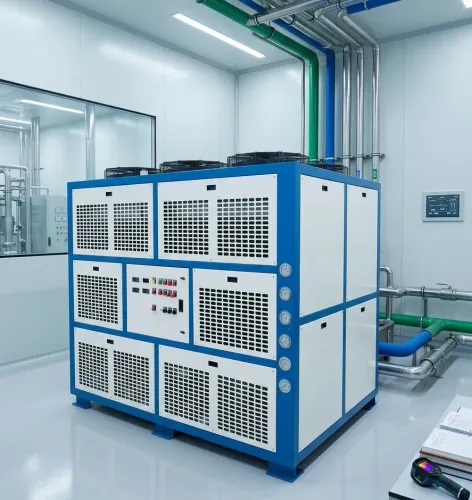
In the paint and coating manufacturing industry, temperature control is an important part of maintaining consistent product quality and efficient production. During paint grinding and dispersion processes, friction and mechanical energy can generate significant heat. If this heat is not controlled, it can affect viscosity, color consistency, grinding efficiency, and the overall quality of the finished paint.
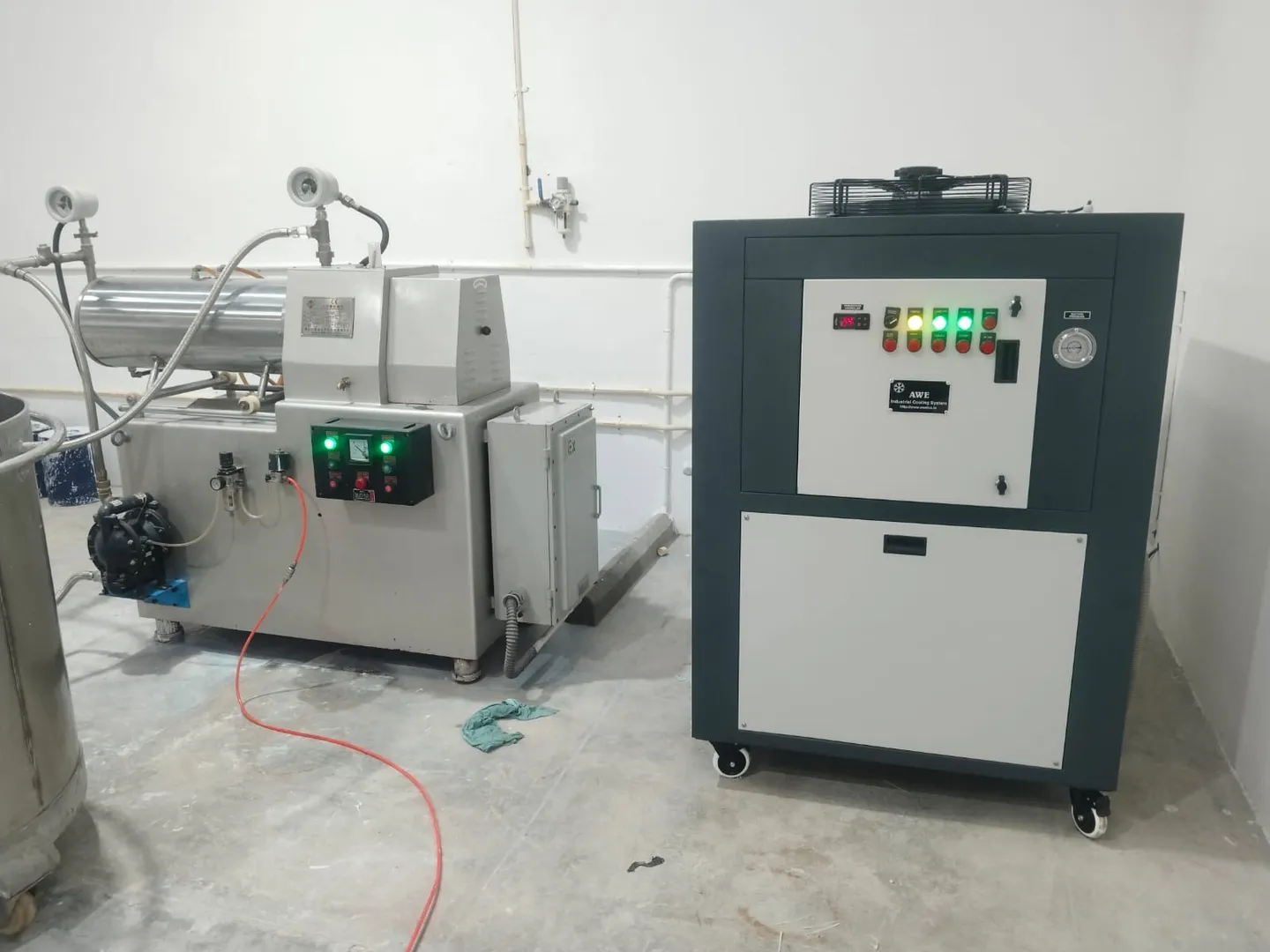
A chiller for paint grinding machines provides a reliable cooling solution by circulating temperature-controlled water or coolant through the machine's cooling system. Industrial chillers help maintain stable operating temperatures and support continuous production.
Why Is Cooling Required in Paint Grinding?
Paint grinding machines, bead mills, basket mills, and dispersion equipment generate heat during operation. Excessive temperature can lead to several production problems, including:
- Changes in paint viscosity
- Inconsistent color and dispersion
- Reduced product quality
- Excessive evaporation of solvents
- Thermal degradation of certain materials
- Increased wear on machine components
- Difficulty maintaining consistent batch quality
An appropriately sized industrial chiller for paint manufacturing helps remove this process heat and maintain the required temperature throughout production.
How Does a Chiller for a Paint Grinding Machine Work?
A typical industrial chiller uses a refrigeration circuit to remove heat from process water or coolant.
The cooled fluid is circulated through the jacket or heat exchanger of the paint grinding machine. Heat generated during grinding is transferred to the coolant, which returns to the chiller. The chiller removes this heat and sends the cooled fluid back to the machine.
This continuous cooling cycle helps maintain stable process temperatures even during long production runs.
Benefits of Using a Paint Grinding Machine Chiller
1. Consistent Temperature Control
Maintaining a stable temperature helps achieve consistent grinding and dispersion conditions from batch to batch.
2. Better Paint Quality
Temperature fluctuations can influence viscosity and dispersion. Effective cooling helps maintain the desired processing conditions and contributes to consistent finished-product quality.
3. Improved Machine Performance
Controlling operating temperature can help prevent excessive thermal stress on grinding equipment and associated components.
4. Continuous Production
A properly designed industrial process chiller can provide continuous cooling for demanding manufacturing operations.
5. Improved Energy Efficiency
Modern industrial chillers can be designed according to the actual cooling load, helping avoid unnecessary energy consumption.
6. Protection Against Overheating
Continuous heat removal helps prevent excessive temperature buildup during grinding and dispersion operations.
Applications of Chillers in the Paint Industry
Chillers can be used for cooling different types of equipment and processes in paint and coating manufacturing, including:
- Paint grinding machines
- Bead mills
- Basket mills
- Sand mills
- High-speed dispersers
- Mixing tanks
- Resin processing equipment
- Pigment dispersion systems
- Coating manufacturing equipment
- Ink manufacturing equipment
The required chiller capacity depends on the machine type, production capacity, operating temperature, coolant flow rate, and heat generated during the process.
How to Choose a Chiller for a Paint Grinding Machine
Selecting the right paint grinding machine chiller requires evaluating several technical parameters:
Cooling Capacity
The chiller should have sufficient capacity to remove the heat generated by the grinding process. Undersized chillers may struggle to maintain the required temperature.
Required Temperature
The required coolant temperature depends on the paint formulation and manufacturing process. The chiller should be selected according to the required inlet and outlet temperatures.
Flow Rate
Adequate coolant flow through the machine's cooling jacket or heat exchanger is essential for effective heat transfer.
Operating Conditions
Ambient temperature, production hours, machine load, and installation environment should be considered when selecting the chiller.
Water-Cooled or Air-Cooled Chiller
Depending on the facility and installation requirements, manufacturers can choose between air-cooled and water-cooled systems.
Why Choose a Custom Industrial Chiller?
Every paint manufacturing process has different cooling requirements. A custom-designed industrial chiller for paint grinding machines can be configured according to the machine's cooling load, temperature requirements, available space, and production conditions.
Proper selection helps ensure reliable cooling, stable operation, and long-term performance.
Conclusion
Temperature control is an important factor in paint grinding and dispersion operations. A reliable chiller for paint grinding machines helps remove process heat, maintain consistent operating temperatures, protect equipment, and support consistent production quality.
For paint manufacturers, selecting the correct cooling capacity and chiller configuration is essential for achieving efficient and dependable operation. An experienced industrial chiller manufacturer can evaluate the process requirements and recommend a suitable cooling system.
Keywords