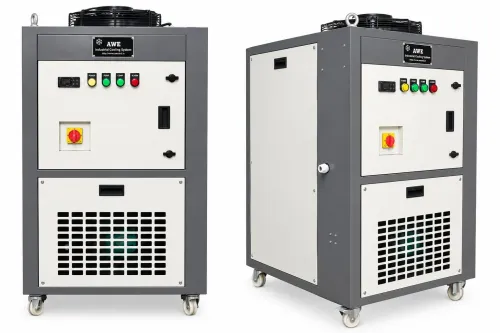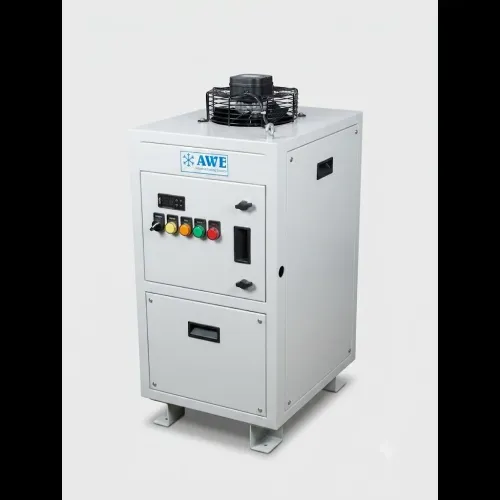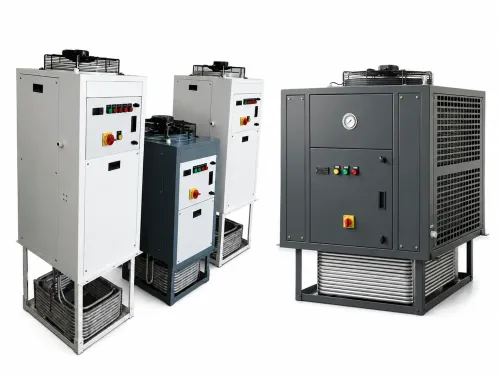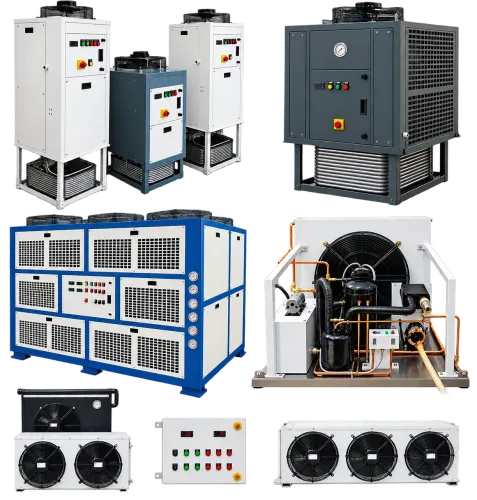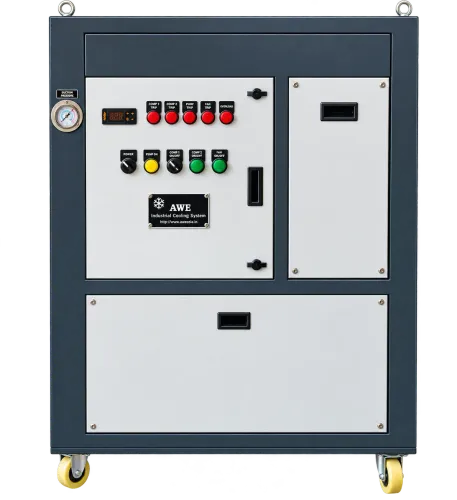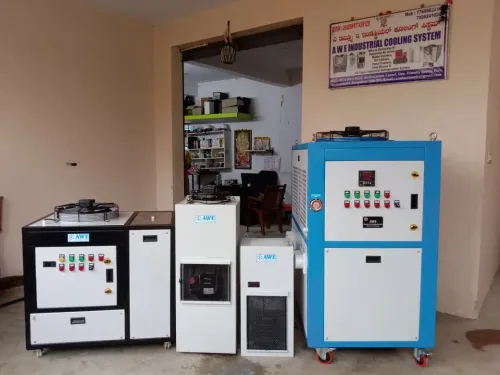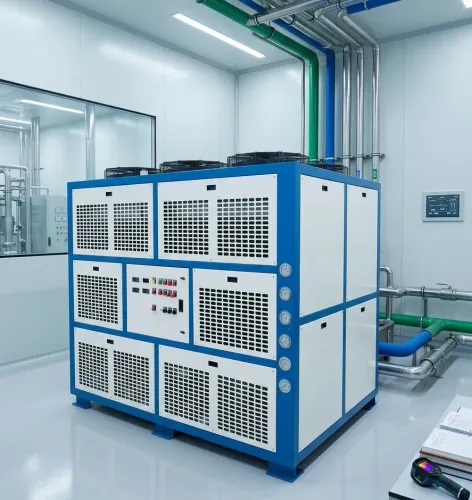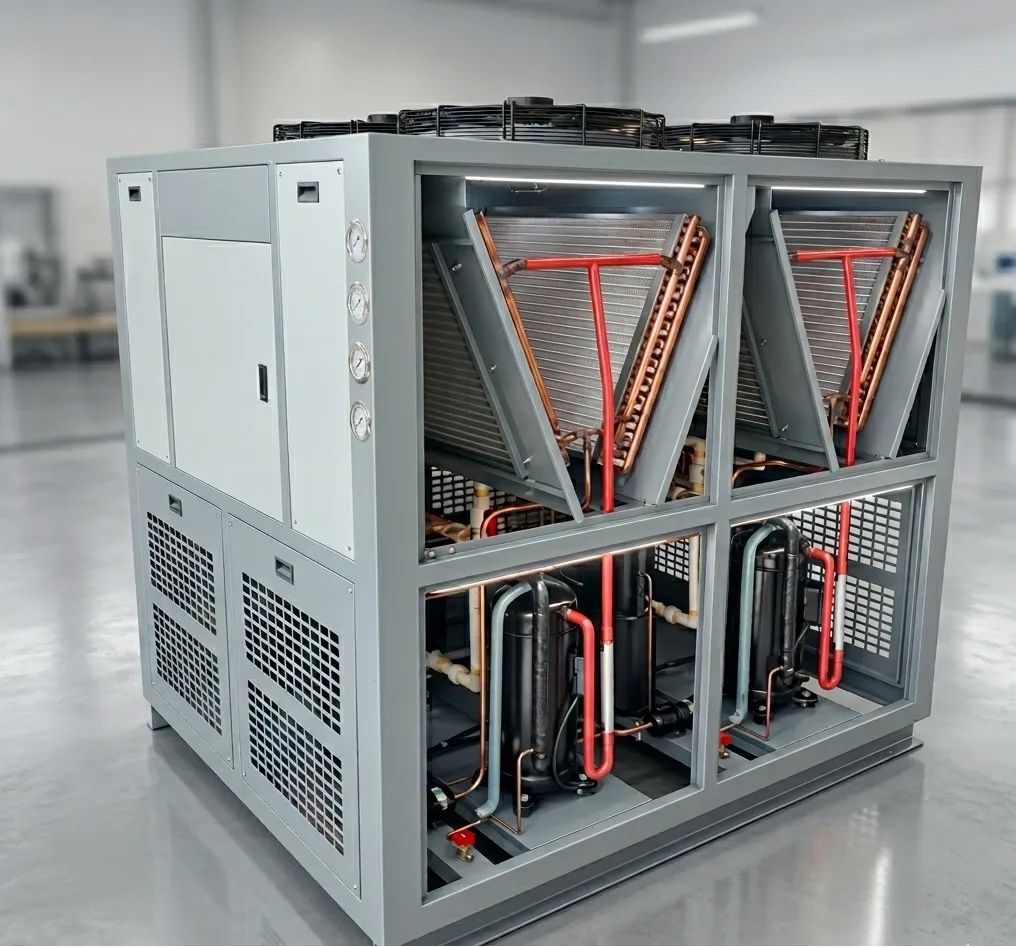
In large commercial facilities—from high-rise office buildings and hospitals to educational campuses and data centers—standard rooftop units or split systems often lack the cooling capacity required to manage thermal loads efficiently. This is where commercial HVAC chillers come into play.
A commercial chiller acts as the heart of a building’s central cooling system, generating chilled water that is circulated through air handling units (AHUs) and fan coil units (FCUs) to absorb indoor heat and deliver precise environmental control.
⚙️ How Commercial Chillers Work: The Refrigeration Cycle
Commercial chillers operate using a continuous thermodynamic refrigeration cycle that transfers heat away from a building's interior and rejects it into the outdoor environment.
Evaporation: Warm water returning from the building's air handlers enters the chiller's evaporator. Heat transfers from this water loop into a cold liquid refrigerant, causing the refrigerant to evaporate into a low-pressure gas.
Compression: The gas refrigerant flows into the compressor, which raises its pressure and temperature, turning it into a hot, high-pressure gas.
Condensation: The hot refrigerant enters the condenser, where it transfers its heat to an external cooling medium (either outdoor air or water). As heat is rejected, the refrigerant condenses back into a high-pressure liquid.
Expansion: The liquid refrigerant passes through an expansion valve, dropping its pressure and temperature sharply before re-entering the evaporator to repeat the process.
🏢 Primary Types of Commercial Chillers
While all chillers follow the basic refrigeration cycle, they vary significantly in heat rejection methods and compressor technology.
1. Air-Cooled Chillers
Air-cooled chillers use mechanical fans to blow ambient air across condenser coils to dissipate heat.
- Best Suited For: Small to medium commercial properties, facilities with limited water access, or roof-mounted installations.
- Advantages: Lower installation costs, fewer components (no cooling towers required), and simplified maintenance.
- Disadvantages: Slightly lower energy efficiency (COP) in high ambient outdoor temperatures, higher noise levels, and exposed to outdoor weather elements.
2. Water-Cooled Chillers
Water-cooled chillers transfer condenser heat to a secondary water loop, which is then pumped to an outdoor cooling tower where the heat is released via evaporative cooling.
- Best Suited For: Large commercial complexes, multi-story buildings, and continuous heavy-load facilities like data centers and hospitals.
- Advantages: Superior energy efficiency, quieter indoor operation, and significantly longer operational lifespans (20+ years).
- Disadvantages: Higher upfront investment, higher physical footprint (requires a cooling tower, pumps, and water treatment systems), and ongoing water quality management needs.
3. Absorption Chillers
Unlike mechanical vapor-compression chillers that rely on electric compressors, absorption chillers use a thermal heat source (such as steam, hot water, or waste heat from CHP systems) to drive the cooling process.
Key Insight: Absorption chillers are ideal for facilities with access to low-cost waste heat, such as hospitals with on-site co-generation plants or industrial campuses.
Key Considerations for System Selection
Selecting the right commercial HVAC chiller requires balancing physical, financial, and operational criteria:
- Energy Efficiency (COP & IPLV): Evaluate both full-load performance (Coefficient of Performance) and part-load performance (Integrated Part Load Value). Variable Frequency Drives (VFDs) enable compressors to match actual cooling loads, lowering energy consumption significantly.
- Redundancy & Modular Design: Installing multiple smaller modular chillers instead of a single massive unit provides redundancy. If one chiller requires service, the remaining units continue meeting building load demands.
- Maintenance & Water Treatment: Water-cooled systems require rigorous chemical treatment to prevent scale, bio-fouling, and corrosion inside heat exchanger tubes. Air-cooled units demand regular coil cleaning and fan inspections.
- Refrigerant Transition: Modern systems utilize environmentally friendly refrigerants with low Global Warming Potential (GWP), such as R-454B, R-1234ze, or R-513A, aligning with evolving environmental regulations
Keywords