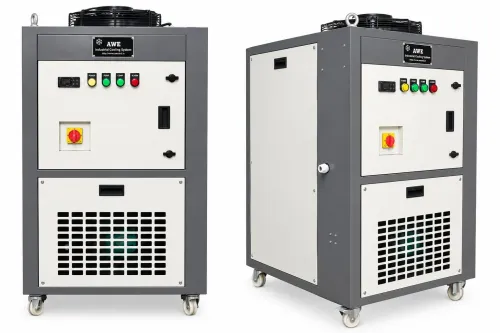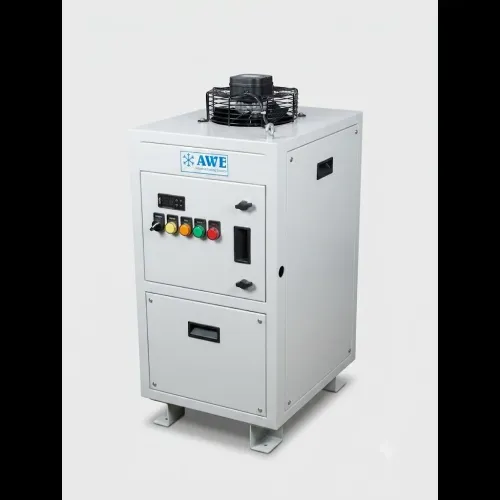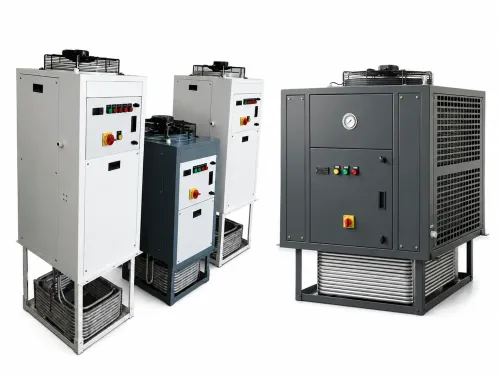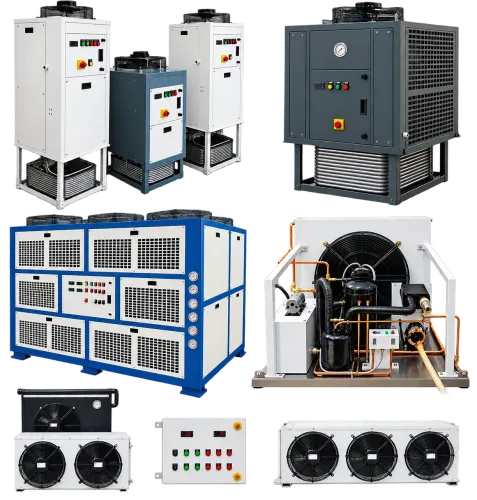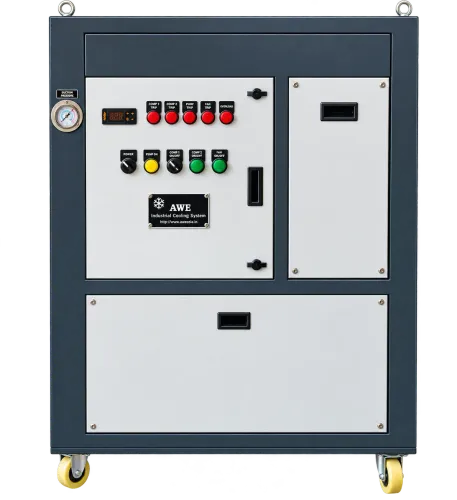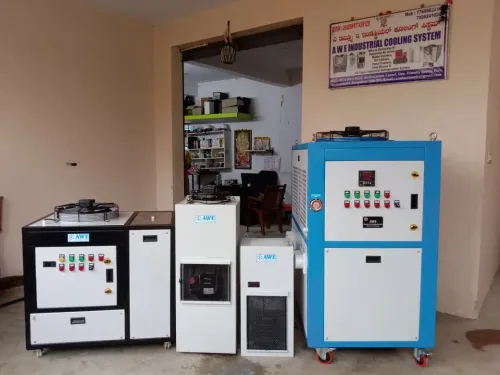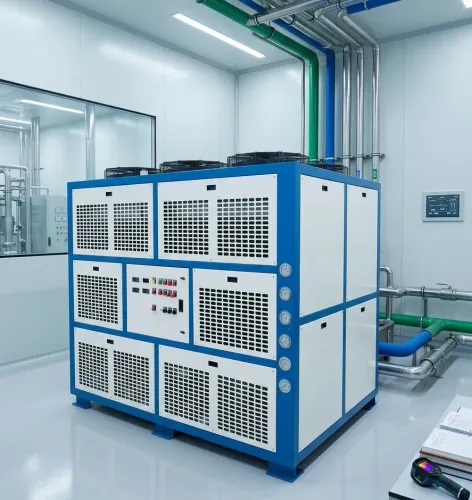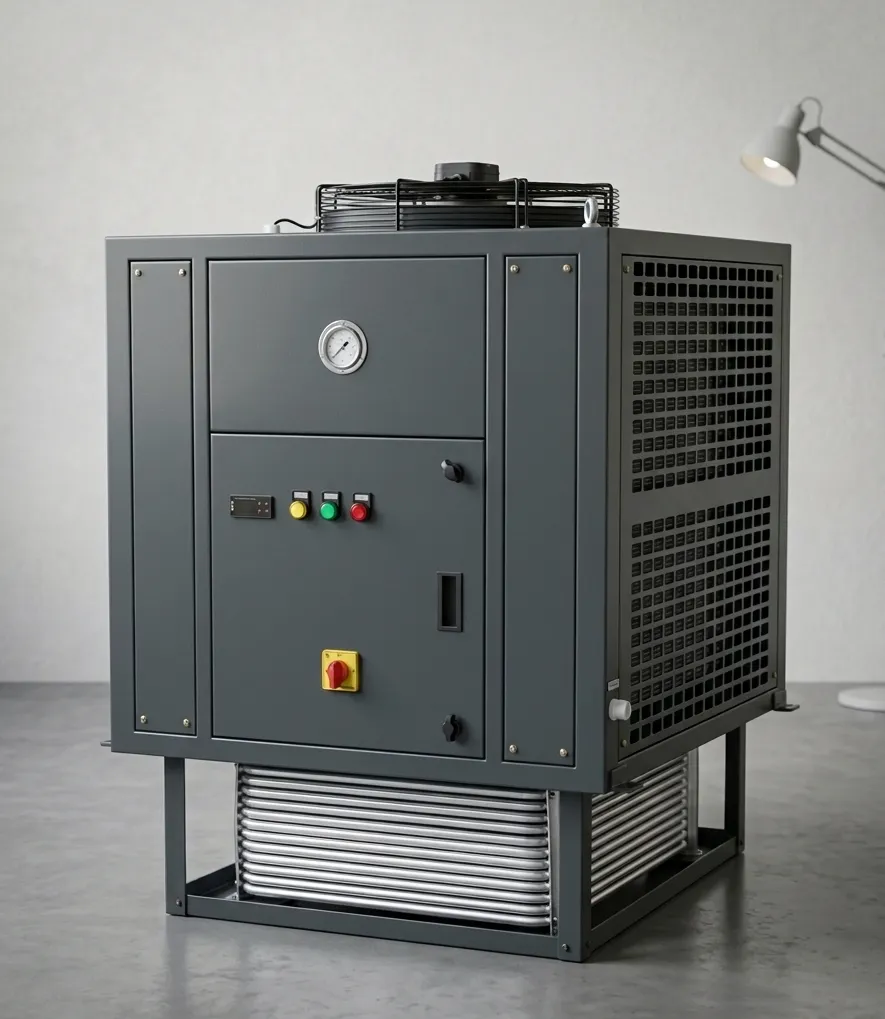
Bangalore has grown into one of India's biggest hubs for precision manufacturing, machine tools, plastics, pharma, and electronics — and every one of these industries depends on one unglamorous but critical piece of equipment: the industrial chiller. Whether it's cooling hydraulic oil in a CNC machine, chilling water for injection molding, or protecting an electrical control panel from overheating, choosing the right chiller directly affects your production uptime, product quality, and energy bills.
If you're searching for oil chiller manufacturers in Bangalore, water chiller manufacturers in Bangalore, or panel cooler manufacturers in Bangalore, this guide breaks down what each system does, how to choose the right one, and why sourcing locally — from a manufacturer like AWE Industrial Cooling Systems — gives you a real advantage.
Why Industrial Cooling Matters More Than Most Plants Realize
Every machine that generates friction, compresses fluid, or draws electrical current also generates heat. Left unmanaged, that heat leads to:
- Reduced tool and component life
- Dimensional inaccuracy in precision machining
- Increased downtime from thermal overload trips
- Higher energy consumption
- Premature failure of electrical and electronic components
A correctly sized chiller or panel cooler isn't a luxury add-on — it's part of the core reliability of the machine it's protecting.
Oil Chillers: Keeping Hydraulic and Lubrication Systems Stable
As one of the established oil chiller manufacturers in Bangalore, we regularly get asked why oil temperature control matters so much. Oil chillers are used to regulate the temperature of hydraulic oil, lubrication oil, and spindle oil in machine tools such as CNC lathes, machining centers, grinding machines, and hydraulic power packs.
What an oil chiller does:
- Removes heat generated by pumps, motors, and friction in hydraulic circuits
- Maintains oil viscosity within the optimal range for consistent pressure and flow
- Prevents oil degradation and extends fluid change intervals
- Protects seals, valves, and precision components from thermal expansion issues
Common applications in Bangalore's industrial belt:
- CNC machine tool spindle and hydraulic cooling
- Injection molding hydraulic units
- Grinding machine coolant and oil systems
- Press and stamping machine hydraulics
When machining tolerances are measured in microns, even small temperature swings in the oil can throw off accuracy. This is why machine tool builders and job-shops across Peenya, Bommasandra, and the Electronic City industrial areas increasingly specify oil chillers as standard equipment rather than an afterthought.
Water Chillers: The Backbone of Process Cooling
When plants search for water chiller manufacturers in Bangalore, they're usually trying to solve a specific process cooling problem — not just buy a generic unit. Water chillers circulate chilled water to cool machinery, molds, process equipment, or building HVAC loads. In manufacturing, they're most commonly associated with process cooling rather than comfort cooling.
Types typically used in industry:
- Air-cooled water chillers — easier to install, no cooling tower required, well-suited to Bangalore's moderate climate
- Water-cooled water chillers — more energy-efficient at scale, ideal for larger continuous-duty plants
- Scroll, screw, and reciprocating compressor chillers — chosen based on tonnage and load profile
Where water chillers are used:
- Plastic injection and blow molding (mold cooling)
- Pharmaceutical and API manufacturing (process and reactor cooling)
- Food and beverage processing
- Laser cutting and welding equipment
- Printing and packaging machinery
The right chiller capacity depends on heat load (in TR or kW), ambient temperature, required water outlet temperature, and duty cycle — not just the size of the machine it's paired with. Undersizing leads to poor process control; oversizing wastes capital and energy.
Panel Coolers: Protecting Your Electronics from Bangalore's Heat and Dust
Among panel cooler manufacturers in Bangalore, the most common request we see is protecting control cabinets in environments where dust and heat both work against the electronics inside. Electrical and electronic control panels are often the most sensitive — and most overlooked — part of a production line. Panel coolers (also called panel air conditioners) are compact cooling units mounted directly on control panel enclosures to keep PLCs, VFDs, servo drives, and other electronics within safe operating temperatures.
Why panel cooling matters:
- Electronic components are rated for specific temperature ranges; exceeding them causes nuisance trips, data errors, and shortened component life
- Industrial environments with dust, oil mist, or metal particulate make simple ventilation fans risky — they draw contamination straight into the panel
- Sealed panel coolers maintain IP54/IP55 protection while still cooling the enclosure
Typical use cases:
- CNC and machine tool control cabinets
- VFD and drive panels in process plants
- Server and instrumentation cabinets in harsh factory environments
- Outdoor or semi-outdoor electrical enclosures
A well-selected panel cooler is one of the most cost-effective ways to reduce unplanned downtime caused by electronics failure — a problem that becomes more common as Bangalore's summer ambient temperatures push panel interiors well past safe limits.
How to Choose the Right Chiller or Panel Cooler
- Calculate the actual heat load. Don't rely on machine horsepower alone — factor in duty cycle, ambient conditions, and process requirements.
- Match capacity, not just cost. An undersized unit will run continuously and fail early; an oversized one wastes energy and capital.
- Consider your environment. Dust, oil mist, humidity, and ambient temperature all affect which chiller type and enclosure rating you need.
- Check refrigerant and compressor type. Scroll compressors offer reliability and efficiency for most industrial duty; ensure the refrigerant used complies with current environmental regulations.
- Plan for serviceability. Local availability of spares and service response time matters as much as the unit's specifications — a chiller that's down for a week because parts are shipped from another state costs more than a slightly higher upfront price.
- Look for customization. Standard models don't always fit non-standard machines. A manufacturer that can modify tank size, pump capacity, or enclosure dimensions saves you costly workarounds later.
Why Source Your Chiller from AWE Industrial Cooling Systems
- Faster turnaround — as a Bangalore-based manufacturer, AWE avoids the long interstate freight delays that slow down delivery, installation support, or breakdown spares
- Local engineering support — our team conducts on-site visits for load calculation, commissioning, and troubleshooting, so support is practical, not theoretical
- Understanding of local industry — being embedded in Bangalore's machine tool, electronics, and process industry ecosystem means we understand the specific duty cycles and ambient conditions plants here actually operate under
- Easier after-sales service — annual maintenance contracts, spare parts, and emergency repairs are far more responsive when you're working with a local supplier
- Competitive pricing — avoiding long logistics chains keeps both capital and running costs lower
Final Thoughts
Oil chillers, water chillers, and panel coolers may not be the most visible equipment on your shop floor, but they're often what stands between smooth, precise production and costly downtime. Getting the sizing, type, and build quality right — and working with a manufacturer who understands your specific process and local operating conditions — pays for itself many times over in reduced breakdowns, better product quality, and longer equipment life.
If you're setting up a new line, retrofitting an existing machine, or simply replacing an aging chiller, it's worth getting a proper heat-load assessment done before you buy. The right unit, sized correctly from day one, is always cheaper than the wrong one bought on price alone.
Keywords