Introduction
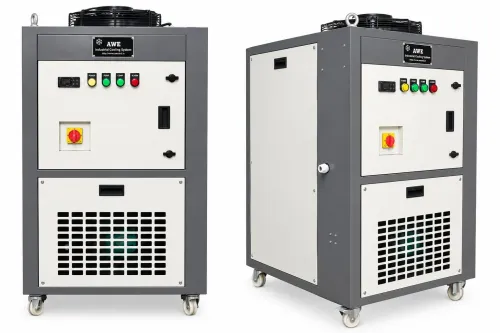
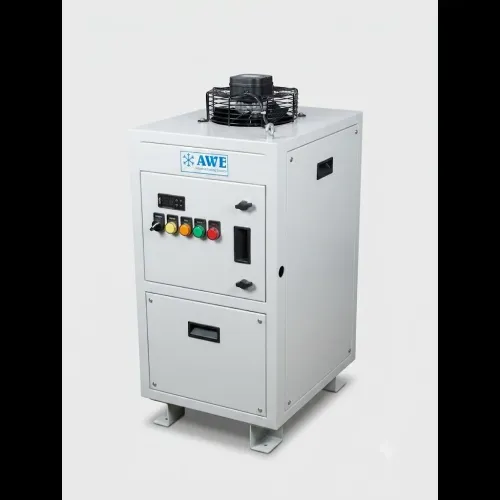
Industrial processes often require reliable and precise temperature control to maintain product quality, improve machine performance, and prevent overheating. A skid type water chiller provides a compact and integrated cooling solution by mounting the major chiller components on a common skid or base frame.
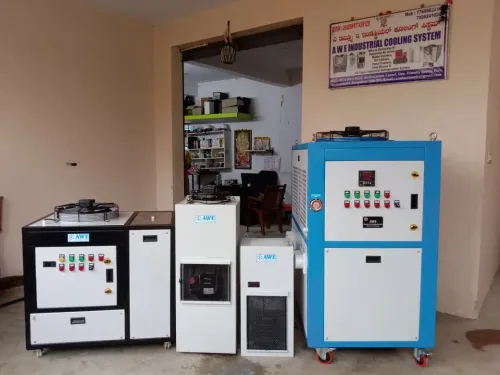
AWE Industrial Cooling System is a skid type water chiller manufacturer in Bangalore, offering industrial cooling solutions designed for applications that require efficient, dependable, and easy-to-install chilled water systems.
What Is a Skid Type Water Chiller?
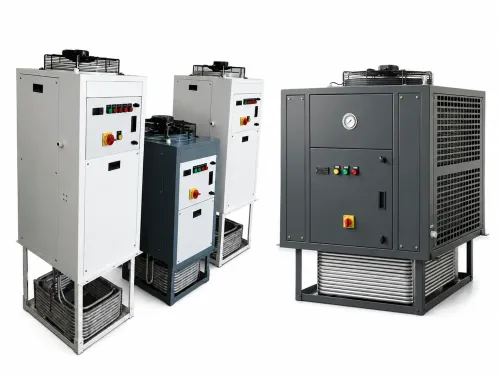
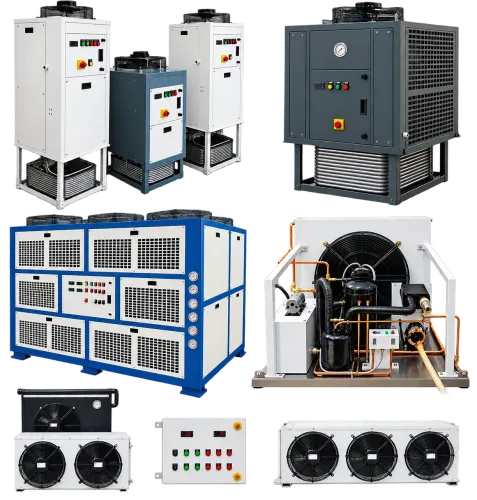
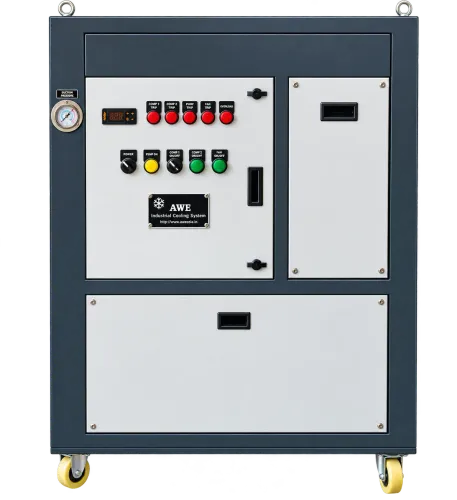
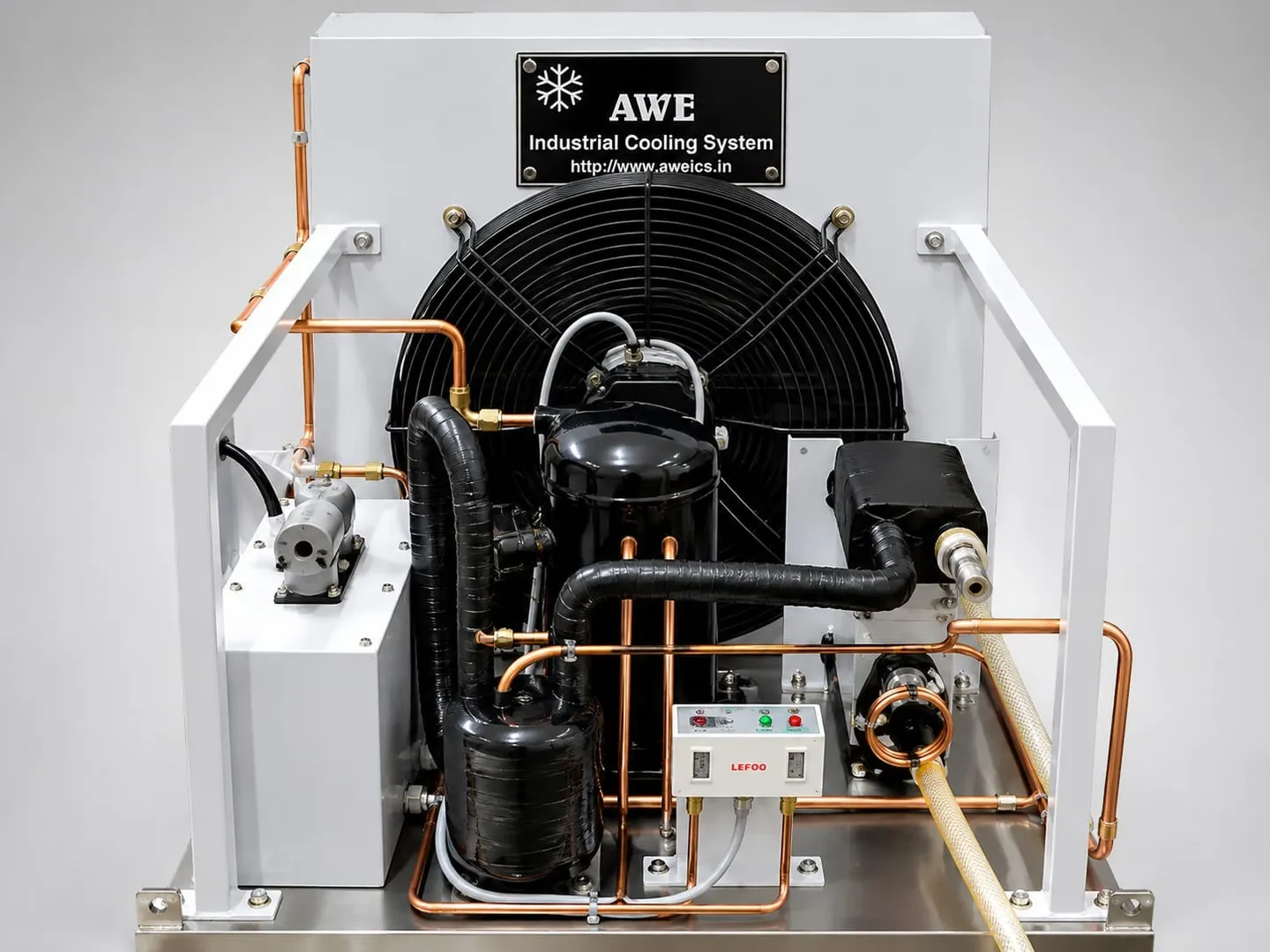
A skid type water chiller is a complete chilled-water cooling system assembled on a sturdy skid-mounted frame. Depending on the application, the system can include the refrigeration unit, heat exchanger, pumps, expansion tank, control panel, piping, valves, and other essential components.
Because the major components are integrated into a single package, skid-mounted chillers can simplify transportation, installation, commissioning, and maintenance.
These chillers can be configured according to the required cooling capacity, chilled water temperature, flow rate, operating conditions, and industrial application.
Why Choose a Skid Type Water Chiller?
Skid-mounted water chillers offer several advantages for industrial and commercial applications:
1. Compact and Integrated Design
The components are arranged on a common skid, helping optimize space and creating an organized cooling system.
2. Easy Installation
Since key components are assembled and interconnected before delivery, installation at the site can be more convenient and faster than assembling individual components separately.
3. Easy Transportation
The skid-mounted construction allows the complete cooling package to be handled as a unit, subject to suitable lifting and transportation arrangements.
4. Reliable Temperature Control
A properly selected chiller can maintain the required chilled-water temperature, helping industrial machinery and processes operate within their desired temperature range.
5. Simplified Maintenance
The organized arrangement of equipment, piping, valves, pumps, and controls can make inspection and servicing more convenient.
6. Application-Specific Configuration
A skid type water chiller can be engineered according to the specific requirements of the process, including cooling load, temperature range, water flow, and installation conditions.
Applications of Skid Type Water Chillers
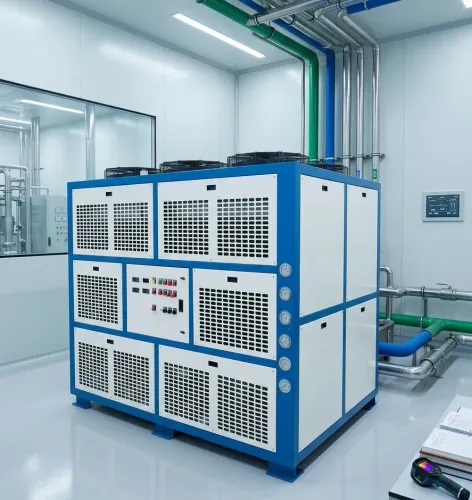
Skid type water chillers are suitable for a wide range of industrial applications where process cooling is required.
Common applications include:
- Plastic processing machines
- Injection molding machines
- CNC and machine tools
- Laser and welding equipment
- Printing machinery
- Pharmaceutical manufacturing
- Food and beverage processing
- Chemical processing
- Paint and coating industries
- Laboratory and testing equipment
- HVAC and industrial air-conditioning systems
- Process cooling applications
- Manufacturing plants
The correct chiller capacity and configuration should be selected based on the actual heat load and process requirements.
Skid Type Water Chiller Components
A typical skid-mounted water chiller may consist of:
- Refrigeration compressor
- Air-cooled or water-cooled condenser
- Evaporator or heat exchanger
- Chilled-water circulation pump
- Expansion tank, where required
- Refrigerant circuit components
- Water piping and valves
- Electrical control panel
- Temperature controller
- Pressure and safety controls
- Skid/base frame
The exact configuration depends on the application and required specifications.
Air-Cooled vs Water-Cooled Skid Chillers
Skid type chillers can be designed with either air-cooled or water-cooled condensing systems.
Air-cooled skid chillers reject heat directly to the surrounding air and generally do not require a cooling tower or condenser-water circuit. They can be suitable where water availability is limited and a simpler installation is preferred.
Water-cooled skid chillers use condenser water to remove heat from the refrigeration system. They can be appropriate for applications where a suitable cooling-water system or cooling tower is available.
The choice depends on factors such as cooling capacity, ambient conditions, available utilities, installation space, operating costs, and application requirements.
How to Select the Right Skid Type Water Chiller
Before purchasing an industrial skid type water chiller, several parameters should be evaluated:
Cooling Capacity
The chiller should have sufficient capacity to remove the heat generated by the process or equipment.
Required Water Temperature
Determine the required supply and return water temperatures based on the application.
Water Flow Rate
The required chilled-water flow rate is important for proper heat transfer and system performance.
Operating Environment
Ambient temperature, installation location, ventilation, and available utilities can influence chiller selection.
Type of Process
Different industries have different cooling requirements. A process chiller for a CNC machine may have different specifications from a chiller used in plastic processing or food production.
Control Requirements
Applications requiring precise temperature control may need appropriate sensors, controllers, alarms, and automation features.
Why Choose AWE Industrial Cooling System?
AWE Industrial Cooling System provides industrial cooling solutions for businesses looking for dependable and application-specific temperature control systems.
As a skid type water chiller manufacturer in Bangalore, AWE can provide chiller systems designed around the customer's process requirements rather than relying on a one-size-fits-all configuration.
The focus can include:
- Application-specific chiller selection
- Customized cooling capacity
- Compact skid-mounted design
- Industrial-grade components
- Integrated control systems
- Process cooling solutions
- Installation and commissioning support
- Service and maintenance support
Skid Type Water Chiller Manufacturer in Bangalore
If you are searching for a skid type water chiller manufacturer in Bangalore, selecting a manufacturer with experience in industrial cooling applications is important. Proper evaluation of cooling load, operating temperature, flow requirements, environmental conditions, and process requirements helps ensure that the selected chiller is suitable for the application.
AWE Industrial Cooling System offers industrial water chillers and customized cooling solutions for manufacturing and process industries in Bangalore and across India.
Conclusion
A skid type water chiller is a practical solution for industries that need a compact, integrated, and reliable cooling system. Its skid-mounted construction can simplify transportation, installation, and maintenance while allowing different components to be integrated into a complete cooling package.
For businesses looking for a skid type water chiller manufacturer in Bangalore, AWE Industrial Cooling System can provide application-focused industrial cooling solutions based on the required cooling capacity, temperature, flow rate, and operating conditions.
Frequently Asked Questions
1. What is a skid type water chiller?
A skid type water chiller is an integrated cooling system in which the main chiller components are assembled on a common skid or base frame.
2. Where are skid type water chillers used?
They are used in manufacturing, plastic processing, CNC machining, food processing, pharmaceutical, chemical, printing, and other process-cooling applications.
3. Can a skid type water chiller be customized?
Yes. Chiller capacity, temperature range, pump configuration, controls, piping, and other specifications can be selected according to the application.
4. What is the difference between a skid chiller and a conventional chiller?
The primary difference is the integrated skid-mounted configuration. A skid chiller brings multiple components together on a common frame, which can simplify handling and installation.
5. How do I choose the right chiller capacity?
Chiller capacity should be determined from the process heat load, required inlet and outlet temperatures, flow rate, operating conditions, and application requirements.
Keywords