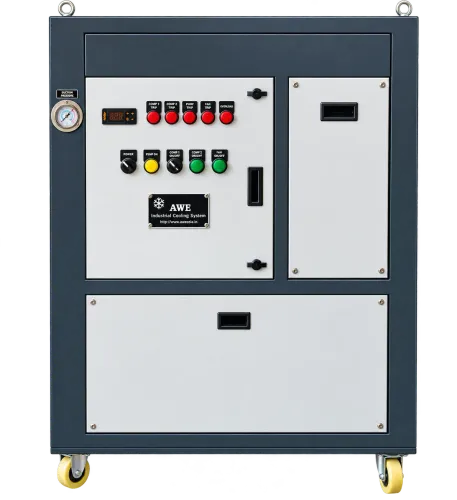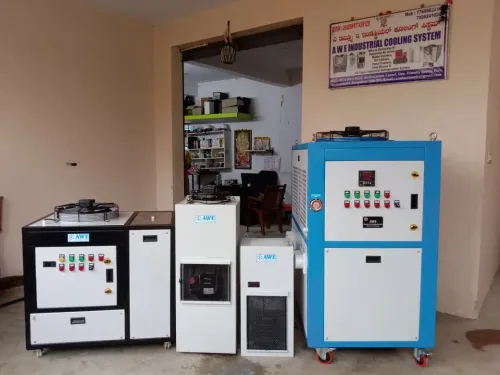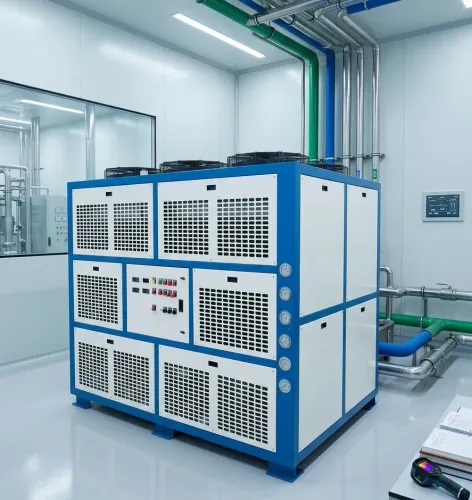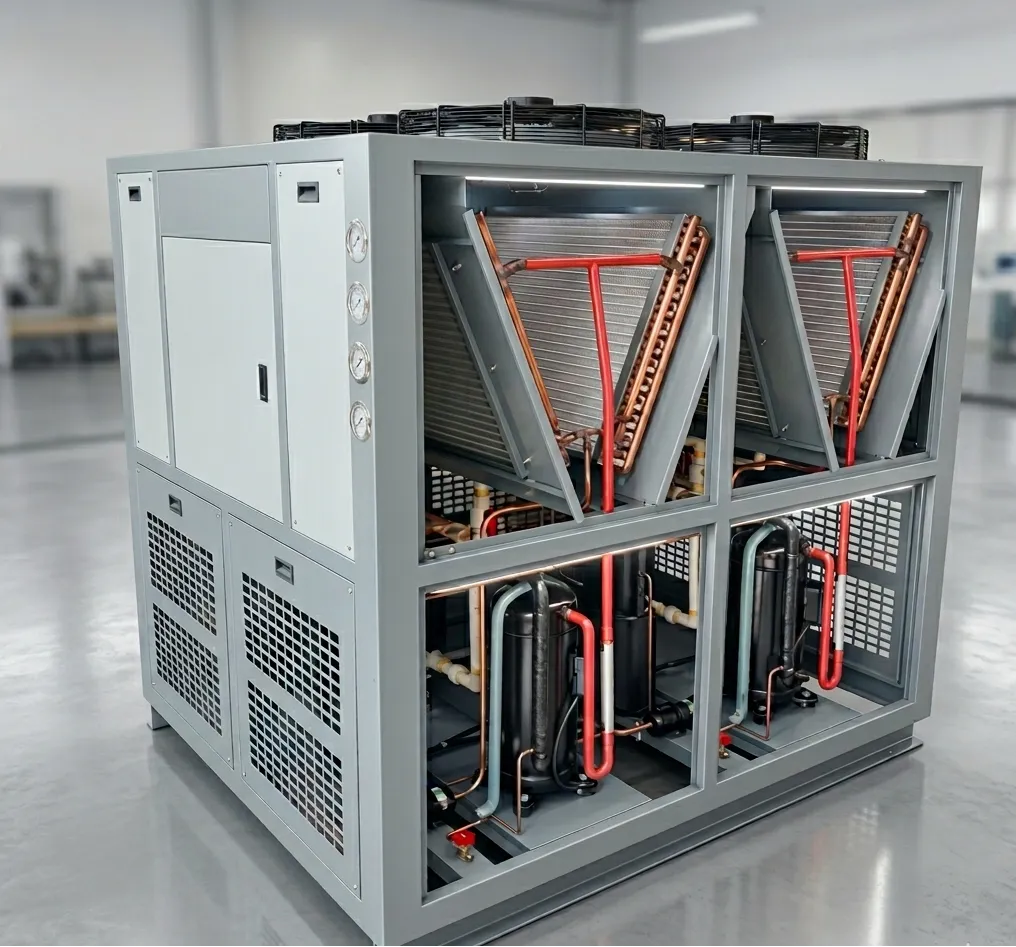
Industrial processes often generate significant amounts of heat. If this heat is not controlled effectively, it can affect product quality, reduce machine efficiency, increase energy consumption, and shorten equipment life. Industrial water chillers provide an efficient and reliable solution for removing excess heat and maintaining precise process temperatures.
From CNC machines and plastic injection molding machines to laser cutting systems, chemical processing equipment, food processing plants, and HVAC applications, industrial chillers play an important role in maintaining stable operating conditions.
This comprehensive guide explains everything you need to know about industrial water chillers, including their types, working principles, performance factors, applications, energy efficiency, and maintenance requirements.
What Is an Industrial Water Chiller?
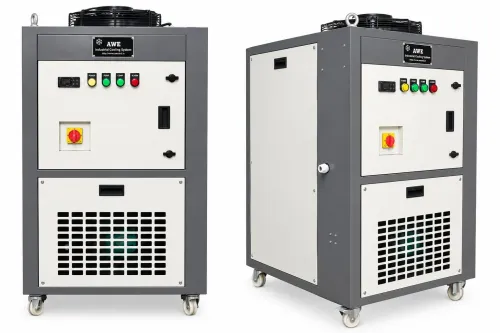
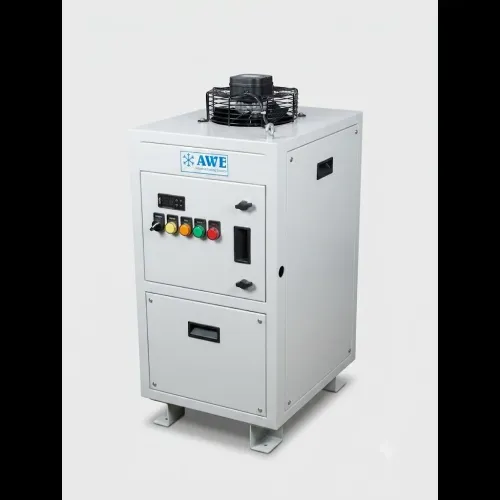
An industrial water chiller is a refrigeration system designed to remove heat from water or another process fluid and maintain it at a predetermined temperature.
The chilled water is circulated through a process or machine using a pump. As the water passes through heat-generating equipment, it absorbs heat. The heated water then returns to the chiller, where the heat is removed and rejected to the surrounding environment.
This continuous cycle allows industrial equipment to operate within a controlled temperature range.
A typical industrial water chiller consists of:
- Compressor
- Condenser
- Expansion valve
- Evaporator
- Refrigerant
- Water pump
- Temperature controller
- Water tank or reservoir
- Electrical control panel
- Safety and protection devices
Depending on the application, chillers can be designed with different cooling capacities, temperature ranges, control systems, and configurations.
How Does an Industrial Water Chiller Work?
Industrial water chillers generally operate according to the vapour-compression refrigeration cycle.
The basic process involves four major stages.
1. Compression
The compressor receives low-pressure refrigerant vapour from the evaporator and compresses it into a high-pressure, high-temperature vapour.
The compressor is one of the most important components of the refrigeration system because it drives the refrigerant circulation.
2. Condensation
The high-temperature refrigerant enters the condenser.
The condenser removes heat from the refrigerant and transfers it either to:
- Ambient air in an air-cooled chiller, or
- Cooling water in a water-cooled chiller.
As heat is removed, the refrigerant changes from a high-pressure vapour into a high-pressure liquid.
3. Expansion
The high-pressure liquid refrigerant passes through an expansion valve or expansion device.
Its pressure and temperature decrease significantly during this process.
4. Evaporation
The cold refrigerant enters the evaporator, where it absorbs heat from the process water.
The refrigerant evaporates into a vapour while the process water becomes cooler.
The chilled water is then circulated back to the industrial equipment, and the refrigeration cycle continues.
Main Types of Industrial Water Chillers
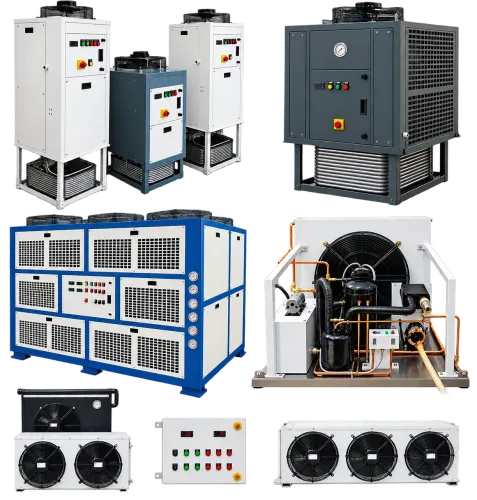
Industrial chillers can be classified in several ways, including by condenser type, cooling method, compressor type, and application.
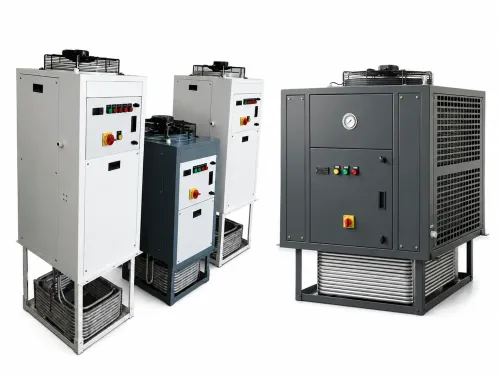
The two most common categories are air-cooled chillers and water-cooled chillers.
1. Air-Cooled Industrial Water Chillers
Air-cooled chillers use ambient air to remove heat from the refrigerant.
Fans draw air across condenser coils, allowing heat to be released into the surrounding atmosphere.
Advantages of Air-Cooled Chillers
- Simple installation
- No cooling tower required
- Lower initial infrastructure requirements
- Relatively easy maintenance
- Suitable for many small and medium industrial applications
- Can be installed where water availability is limited
Limitations
Air-cooled chillers are affected by ambient temperature. When outdoor temperatures are high, condenser performance can decrease, potentially increasing energy consumption.
They also require adequate ventilation and sufficient space around the condenser.
2. Water-Cooled Industrial Water Chillers
Water-cooled chillers use water to remove heat from the refrigerant through a condenser.
The condenser water typically circulates through a cooling tower or another heat-rejection system.
Advantages of Water-Cooled Chillers
- High cooling efficiency
- Suitable for larger cooling capacities
- More stable performance in many high-capacity applications
- Can provide good energy efficiency under suitable operating conditions
- Suitable for continuous industrial operation
Limitations
Water-cooled systems generally require additional infrastructure such as:
- Cooling towers
- Condenser water pumps
- Water treatment systems
- Piping
- Additional maintenance
Water quality is particularly important because scaling, corrosion, and biological growth can affect heat-transfer performance.
Types of Chillers Based on Compressor
The compressor technology used in a chiller has a major impact on capacity, efficiency, operating range, and maintenance.
Reciprocating Compressors
Reciprocating compressors use pistons to compress refrigerant.
They are commonly used in smaller refrigeration and industrial applications.
Benefits
- Robust construction
- Suitable for smaller capacities
- Relatively straightforward servicing
- Good part-load control possibilities in suitable systems
Scroll Compressors
Scroll compressors use two spiral-shaped components to compress refrigerant.
They are widely used in compact and medium-capacity cooling systems.
Benefits
- Compact design
- Lower vibration
- Relatively quiet operation
- Good efficiency
- Fewer moving parts
Screw Compressors
Screw compressors use rotating male and female rotors to compress refrigerant.
They are widely used for medium- and large-capacity industrial applications.
Benefits
- Suitable for continuous operation
- High reliability
- Good capacity control
- Suitable for industrial process cooling
- Available in high-capacity configurations
Centrifugal Compressors
Centrifugal compressors use high-speed rotating impellers to increase refrigerant pressure.
They are generally used in large-capacity central cooling systems.
Benefits
- High cooling capacity
- Excellent efficiency under appropriate operating conditions
- Suitable for large installations
They require more specialized design, operation, and maintenance compared with smaller chiller systems.
Important Components of an Industrial Water Chiller
Understanding the major components helps operators identify potential problems and plan preventive maintenance.
Compressor
The compressor circulates and compresses the refrigerant.
Common compressor types include:
- Scroll
- Reciprocating
- Screw
- Centrifugal
Compressor selection depends on the required cooling capacity and operating conditions.
Condenser
The condenser rejects the heat absorbed by the refrigerant.
It can be:
- Air-cooled
- Water-cooled
A dirty condenser can reduce heat-transfer efficiency and increase compressor workload.
Evaporator
The evaporator is where heat is transferred from the process water to the refrigerant.
Common designs include:
- Shell-and-tube heat exchangers
- Plate heat exchangers
- Brazed plate heat exchangers
The evaporator should be selected according to the required flow rate, temperature difference, fluid characteristics, pressure drop, and application.
Expansion Valve
The expansion valve controls refrigerant flow into the evaporator and reduces refrigerant pressure.
Proper expansion control is essential for efficient refrigeration performance.
Water Pump
The process water pump circulates chilled water between the chiller and the industrial equipment.
Pump selection should consider:
- Required flow rate
- System pressure
- Pipe length
- Elevation
- Pressure losses
- Equipment requirements
Temperature Controller
The controller continuously monitors the water temperature and regulates chiller operation to maintain the desired setpoint.
Modern industrial chillers may use digital controllers with alarms, displays, sensors, and automatic protection functions.
What Is Chiller Cooling Capacity?
Cooling capacity represents the amount of heat a chiller can remove over a specific period.
It is commonly expressed in:
- kW
- TR (tons of refrigeration)
- kcal/hr
- BTU/hr
One ton of refrigeration is approximately 3.517 kW of cooling capacity.
Selecting the correct cooling capacity is critical.
An undersized chiller may struggle to maintain the required temperature, while an oversized system can result in unnecessary capital cost and potentially inefficient operation at low loads.
How to Select the Right Industrial Water Chiller
Choosing an industrial water chiller requires more than simply selecting a cooling capacity.
Consider the following factors.
1. Required Cooling Capacity
Determine how much heat your machine or process generates.
The chiller should have sufficient capacity to remove this heat under the actual operating conditions.
2. Required Water Temperature
Determine:
- Inlet water temperature
- Required outlet water temperature
- Desired temperature stability
Different industrial processes require different temperature ranges.
3. Water Flow Rate
The required water flow rate directly affects heat-transfer performance.
Insufficient flow can lead to poor cooling and may create operational problems.
4. Ambient Temperature
For air-cooled chillers, maximum ambient temperature is particularly important.
A chiller operating in a hot industrial environment must be selected for the actual site conditions rather than ideal laboratory conditions.
5. Operating Hours
If the chiller will operate continuously for 24 hours a day, energy efficiency and reliability become especially important.
A small difference in energy consumption can become significant over several years of operation.
6. Process Fluid
Not every application uses plain water.
Some processes may require:
- Water
- Water-glycol mixtures
- Other compatible heat-transfer fluids
Fluid properties can affect heat transfer, pump sizing, freezing protection, and chiller selection.
7. Installation Environment
Consider:
- Available floor space
- Indoor or outdoor installation
- Ventilation
- Ambient temperature
- Dust levels
- Humidity
- Accessibility for maintenance
Industrial environments can be demanding, so chiller construction should match the site conditions.
Industrial Applications of Water Chillers
Industrial water chillers are used across many industries.
CNC Machine Cooling
CNC machines can generate substantial heat during operation.
A dedicated chiller can help control temperatures in components such as:
- Spindles
- Hydraulic systems
- Cutting systems
- Machine tools
Stable temperature control can help improve machining consistency and protect sensitive components.
Plastic Injection Molding
Cooling is an essential part of plastic manufacturing.
Industrial chillers are commonly used to cool molds, hydraulic systems, and process equipment.
Consistent cooling can contribute to:
- Better product quality
- Improved cycle times
- Reduced dimensional variation
- Stable production
Laser Machine Cooling
Laser cutting, engraving, welding, and marking systems generate heat that needs to be removed efficiently.
Chillers help maintain the required temperature of laser sources and associated components.
Stable cooling can help maintain consistent laser performance.
Food and Beverage Processing
Chillers can be used for process cooling, temperature control, and certain refrigeration-related applications in food and beverage manufacturing.
Hygiene, material compatibility, and temperature requirements should be considered when designing these systems.
Pharmaceutical Manufacturing
Temperature control is critical in pharmaceutical production.
Industrial cooling systems can support processes involving:
- Reactors
- Manufacturing equipment
- Process fluids
- Environmental systems
Temperature stability and system reliability are particularly important in these applications.
Chemical Processing
Chemical processes often generate significant heat.
Industrial chillers can remove process heat and help maintain controlled operating temperatures.
The chiller design must take into account the chemical characteristics of the process fluid and applicable safety requirements.
Printing Machinery
Printing machines can use chillers to control temperatures in:
- Rollers
- Hydraulic systems
- Ink systems
- Process equipment
Stable temperature control can contribute to consistent production quality.
Factors That Affect Chiller Performance
Even a properly designed chiller may experience reduced performance if operating conditions are not suitable.
Condenser Cleanliness
Dust and dirt accumulation on air-cooled condenser coils restricts airflow and reduces heat rejection.
Regular cleaning is therefore important.
Water Quality
Poor water quality can cause:
- Scaling
- Corrosion
- Fouling
- Reduced heat transfer
- Blocked passages
Water treatment and filtration can help maintain system performance.
Refrigerant Charge
Incorrect refrigerant charge can affect cooling performance and compressor operation.
Refrigerant-related work should be performed by qualified technicians using appropriate procedures.
Water Flow
Incorrect flow rates can reduce heat-transfer performance.
Flow should remain within the operating range specified for the chiller and application.
Ambient Conditions
High ambient temperatures can reduce the performance of air-cooled chillers.
The chiller should be selected based on the actual maximum site temperature.
How to Improve Industrial Chiller Energy Efficiency
Energy consumption is one of the most important considerations in industrial cooling.
Here are several ways to improve chiller efficiency.
Maintain Clean Heat Exchangers
Clean heat-transfer surfaces allow the system to reject and absorb heat more effectively.
Maintain Correct Water Flow
Avoid unnecessarily high or low flow rates.
Optimize Temperature Setpoints
Do not operate the chiller at a lower temperature than the process actually requires.
Lower temperature setpoints can increase refrigeration energy consumption.
Use Efficient Compressors
Modern compressor technologies and appropriate capacity control can improve efficiency, especially during variable-load operation.
Maintain Proper Refrigerant Conditions
Regular inspection can help identify refrigeration-system problems before they lead to major efficiency losses.
Improve Insulation
Proper insulation of chilled-water pipes and tanks reduces unwanted heat gain.
Use Variable-Speed Components Where Appropriate
Variable-speed pumps and fans can reduce energy consumption when the cooling load changes.
Industrial Water Chiller Maintenance Checklist
Preventive maintenance is essential for reliable chiller operation.
A maintenance program should include regular inspections of both the refrigeration and water circuits.
Daily Checks
Operators can monitor:
- Chilled water temperature
- Return water temperature
- Refrigeration pressures where applicable
- Pump operation
- Unusual noise
- Vibration
- Alarm indications
- Water leaks
- Abnormal temperature fluctuations
Weekly Checks
Depending on the application:
- Inspect condenser condition
- Check water levels
- Inspect filters
- Check visible piping
- Check electrical connections for signs of overheating
- Inspect the surrounding area for adequate airflow
Monthly Maintenance
A more detailed inspection can include:
- Cleaning condenser coils
- Checking pump operation
- Inspecting sensors
- Checking electrical panels
- Inspecting contactors and relays
- Checking water circulation
- Inspecting insulation
- Reviewing operating temperatures and pressures
Periodic Professional Maintenance
Qualified technicians should periodically inspect:
- Compressor performance
- Refrigerant system
- Expansion device
- Heat exchangers
- Electrical components
- Safety controls
- Refrigerant leakage
- Pump and motor condition
- Control system operation
The exact maintenance frequency should be based on the manufacturer's recommendations and actual operating conditions.
Common Industrial Chiller Problems and Solutions
Chiller Not Reaching the Set Temperature
Possible causes include:
- Insufficient cooling capacity
- High ambient temperature
- Dirty condenser
- Poor water flow
- Incorrect refrigerant conditions
- Excessive process heat load
The actual cause should be diagnosed rather than simply lowering the temperature setpoint.
High Refrigeration Pressure
Possible causes can include:
- Dirty condenser
- Poor airflow
- High ambient temperature
- Condenser water problems
- Refrigeration-system issues
Low Water Flow
Possible causes include:
- Blocked filter
- Pump problems
- Closed or partially closed valve
- Pipe blockage
- Incorrect pump selection
- Air in the water circuit
Frequent Compressor Cycling
Frequent start-stop operation may indicate:
- Incorrect system sizing
- Control issues
- Insufficient water volume
- Sensor problems
- Low load conditions
Frequent cycling should be investigated because excessive starts can increase compressor wear.
Excessive Energy Consumption
Potential causes include:
- Dirty heat exchangers
- High condensing temperature
- Incorrect operating setpoints
- Poor insulation
- Pump inefficiency
- Refrigeration-system problems
- Operating outside the intended design conditions
Monitoring energy consumption over time can help identify gradual performance degradation.
Industrial Chiller vs Standard Commercial Chiller
Although both systems use refrigeration principles, industrial chillers are designed for demanding process applications.
Industrial chillers may need to provide:
- Continuous operation
- Higher reliability
- Precise temperature control
- Higher cooling capacity
- Custom configurations
- Robust construction
- Integration with manufacturing equipment
The correct choice depends on the specific process rather than simply comparing rated cooling capacity.
Why Temperature Stability Matters in Industrial Processes
Temperature stability is often just as important as cooling capacity.
A chiller that can remove heat but cannot maintain a stable temperature may not be suitable for a precision application.
Temperature fluctuations can affect:
- Product dimensions
- Machine accuracy
- Material properties
- Production cycle times
- Equipment life
- Process consistency
For this reason, industrial chillers should be selected according to both cooling capacity and temperature-control requirements.
Benefits of Using Industrial Water Chillers
A properly designed industrial chiller can provide several benefits.
Improved Process Stability
Stable temperatures help manufacturing processes operate consistently.
Better Equipment Protection
Removing excess heat helps protect temperature-sensitive components.
Improved Product Quality
Consistent process temperatures can reduce temperature-related variations in production.
Reduced Downtime
Reliable cooling helps prevent thermal problems that can cause equipment interruptions.
Better Energy Management
Efficient chillers can reduce the energy required to remove process heat.
Longer Equipment Life
Maintaining appropriate operating temperatures can reduce thermal stress on equipment.
How Often Should an Industrial Water Chiller Be Serviced?
The ideal service interval depends on:
- Chiller type
- Operating hours
- Cooling capacity
- Environment
- Water quality
- Dust levels
- Process conditions
- Manufacturer recommendations
A chiller operating continuously in a dusty industrial environment may require more frequent condenser cleaning than a lightly used unit in a clean facility.
Instead of relying on a fixed schedule alone, maintenance should also be based on operating data and equipment condition.
How to Calculate Basic Chiller Cooling Load
For water-based systems, cooling load can be estimated using the relationship between flow rate, specific heat, and temperature difference.
In practical terms, cooling capacity depends on:
Cooling Load = Water Flow × Specific Heat × Temperature Difference
Where:
- Water flow represents the amount of water being circulated
- Specific heat represents the heat capacity of the fluid
- Temperature difference represents the difference between entering and leaving water temperatures
For industrial system design, additional factors such as process heat, ambient heat gain, pump heat, pipe losses, fluid properties, and safety margins should also be considered.
A professional chiller manufacturer can calculate the required capacity based on the actual operating conditions.
Choosing an Industrial Water Chiller Manufacturer
Selecting the right manufacturer is just as important as selecting the right chiller.
Look for a manufacturer that can provide:
- Accurate cooling-capacity calculations
- Application-specific recommendations
- Quality refrigeration components
- Reliable control systems
- Proper safety protection
- Technical support
- Installation guidance
- Preventive maintenance support
- Spare-parts availability
- After-sales service
A good manufacturer should understand the industrial process rather than simply supplying a standard cooling unit.
Frequently Asked Questions About Industrial Water Chillers
What is the main purpose of an industrial water chiller?
The main purpose is to remove heat from industrial equipment or processes and maintain the required operating temperature.
What is the difference between an air-cooled and water-cooled chiller?
An air-cooled chiller rejects heat to ambient air, while a water-cooled chiller uses water to remove heat from the condenser and typically requires a separate heat-rejection system.
What industries use industrial water chillers?
Industrial chillers are commonly used in CNC machining, plastic injection molding, laser processing, chemical processing, pharmaceuticals, food processing, printing, electronics, and many other manufacturing applications.
How do I choose the correct chiller capacity?
The required capacity depends on the process heat load, water flow rate, inlet and outlet temperatures, ambient conditions, operating hours, and application requirements.
How can I reduce industrial chiller energy consumption?
Regular maintenance, clean heat exchangers, correct water flow, appropriate temperature setpoints, efficient components, proper insulation, and suitable capacity control can all help reduce energy consumption.
How long does an industrial water chiller last?
Service life depends on design quality, operating conditions, maintenance, water quality, and component condition. Regular preventive maintenance can significantly improve reliability and service life.
Can a chiller operate continuously?
Yes. Many industrial chillers are designed for continuous operation, provided they are correctly selected, installed, operated, and maintained.
What temperature can an industrial water chiller maintain?
The operating temperature range varies by chiller design and application. Standard process chillers may operate at conventional chilled-water temperatures, while specialized systems can be designed for lower or higher process temperatures.
Conclusion
Industrial water chillers are an essential part of modern manufacturing and process cooling. By continuously removing excess heat and maintaining controlled temperatures, they help industrial equipment operate efficiently, reliably, and consistently.
The right chiller depends on several factors, including cooling capacity, temperature requirements, water flow, ambient conditions, operating hours, process fluid, installation environment, and energy-efficiency goals.
Whether you need cooling for CNC machines, plastic injection molding, laser equipment, chemical processing, pharmaceuticals, or another industrial application, selecting a properly designed chiller and maintaining it regularly can make a significant difference in equipment performance and operating costs.
A reliable industrial cooling system is not simply an investment in temperature control—it is an investment in production efficiency, equipment protection, product quality, and long-term operational reliability.
Keywords